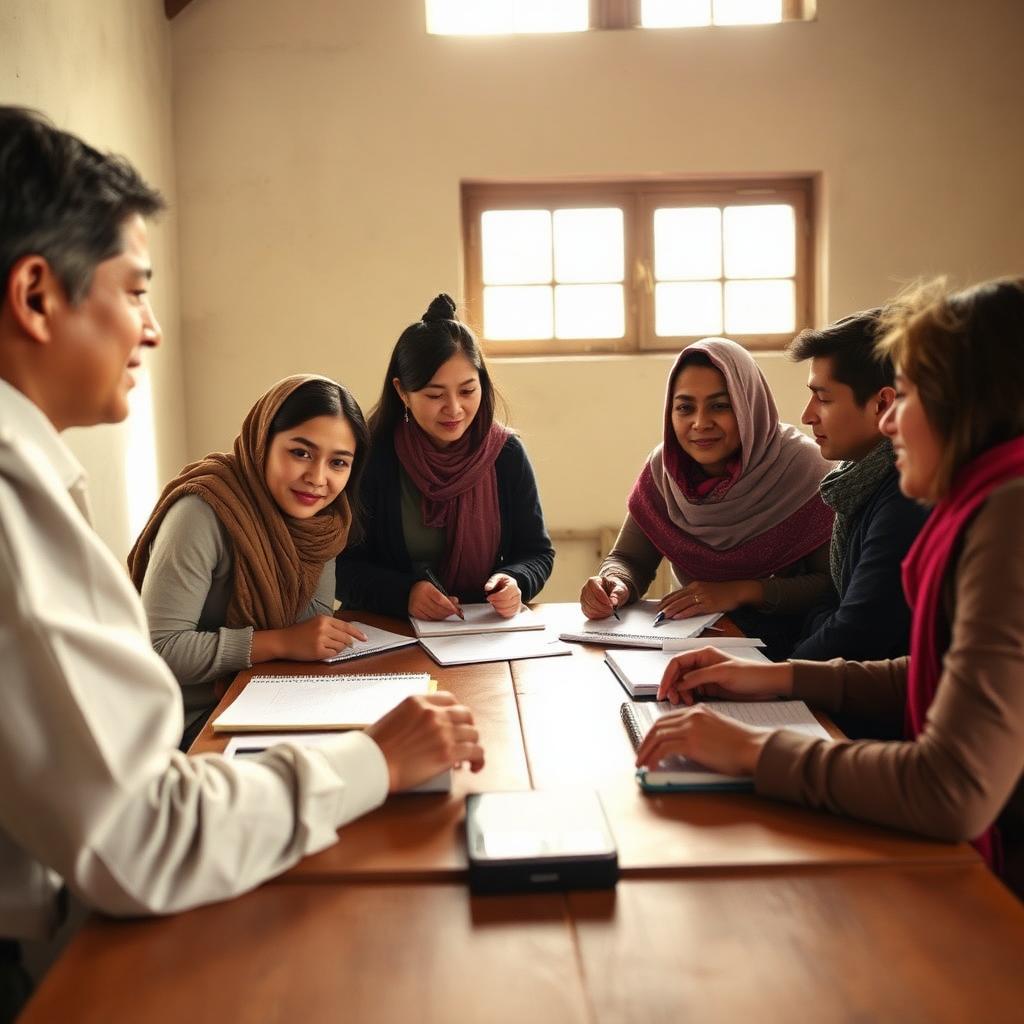
Counsellors and researchers collaborating in Nepal

Our Work in Practice

Research & Community Partnerships

Academic research and long-standing community partnerships ground Nepal House Kaski's trauma-informed work across Pokhara and beyond.

Research @ Nepal House

Canadian and Nepali Counsellors: In Collaboration for Social Justice in Nepal

A 2014 academic journal article outlining the work of a group of volunteer Canadian counsellors who educated and collaborated with counsellors at Nepal House.

In working with our Nepali colleagues, we are aware that our counselling and supervision practices are embedded in Western values. This calls us to diligently strive toward developing an equitable partnership that does not contribute or maintain any systems of oppression.
We promote our colleagues' right to know what we do, why we do it, and how we do it, so that they can create their own culturally appropriate interventions for the children with their current local knowledge of healing, ritual, and therapeutic practices.

Keats, P. A. & Sharma, A. (2014). Canadian Journal of Counselling, 48(3), 284–299.

Neurofeedback to Help Children Living in Poverty

Many children who have experienced trauma are unable to stay calm and focus on learning. In 2013, Dr. Alissa Antle designed a brain-computer interface called Mind-Full for the children of Nepal House — a modern take on the ancient practice of meditation using neurofeedback.

With an interactive tablet and an EEG headset, Nepal House children played a series of culturally appropriate games that teach self-regulation, including a paragliding exercise — a common sight in Nepal.

Results from a 14-week trial showed that the children were able to transfer self-regulation skills into the classroom and playground, with effects maintained for at least two months. More versions of Mind-Full are now available on Google Play.

Antle, A.N. et al. (2015). Using neurofeedback to teach self-regulation to children living in poverty. IDC '15, 119–128. See also the TED talk .

Body Mapping Workshop in Nepal

Vicki Hannam, a frequent volunteer at NHK, and her colleagues explored whether the therapeutic practice of "body mapping" is appropriate for clients in Nepal. Body mapping is a means of storytelling where individuals create maps of their bodies using drawing, painting or other art-based techniques to visually represent aspects of their lives.

In offering a body mapping workshop at Nepal House, she found that its tenets appeared to be understood and culturally applicable, while emphasizing the importance of meaning across cultural backgrounds.

Vicki Hannam, Rosie Gilliver, Nathaniel Casella, and Lucy Paveley. Social Work Focus (Summer/Autumn 2020, Volume 5, Issue 1, pages 25–27).

Community Partnerships

Nepal House Kaski staff provide trauma training, play therapy, advocacy and support to various community organizations in Pokhara and beyond.

Children Welfare Association

(orphanage)
  • Partnered with NHK for 8 years
  • Children living here have lost parents to disease, violence and natural disasters
  • CWA sponsored NHK to set up a counselling/play therapy room on site
  • NHK counsellors see children there 1 day per week
  • NHK counsellors also provide trauma training to staff

Impact: CWA has reported they value NHK's work and feel more secure knowing NHK is there to support the children as well as the staff who care for them.

  • Partnered with NHK for 9 years
  • NHK is a referral resource when girls under 17 (and as young as 11) are rescued
  • NHK provides individual and group trauma counselling and staff training
  • NHK advocates on behalf of clients to government agencies, lawyers and police to ensure ongoing safety once they are discharged

Impact: Because of NHK's excellent reputation in the community, these agencies are more likely to believe and attend to the girls' stories when NHK is involved.

  • Partnered with NHK for 9 years
  • Counselling room on site; NHK staff see 3–6 children per week
  • When clients get very sick, counsellors visit them in the hospital and support them through their deaths
  • NHK arranges peer counselling to integrate new children and runs groups for residents and staff

Impact: When NHK first began working with Star, no one talked about HIV because of stigma. NHK counsellors advocated for over a year to train caregivers, staff and the children themselves on how to understand HIV and how it affects them.

Forum for the Welfare of Himalayan Children

(orphanage)
  • Partnered with NHK for 15 years
  • Children living here have lost parents to disease, violence and natural disasters
  • Dedicated play therapy room
  • NHK counsellors see children there 1–2 days per week and provide trauma training to staff on site

Impact: Forum staff have remarked on the changes they have seen in the children and caretakers: because of the training provided, house 'parents' are more understanding of trauma and no longer hit, threaten or shame the children.